How to Drift in OutRun 2
Brake drifts, gear drifts, exit speed, and car-class differences.
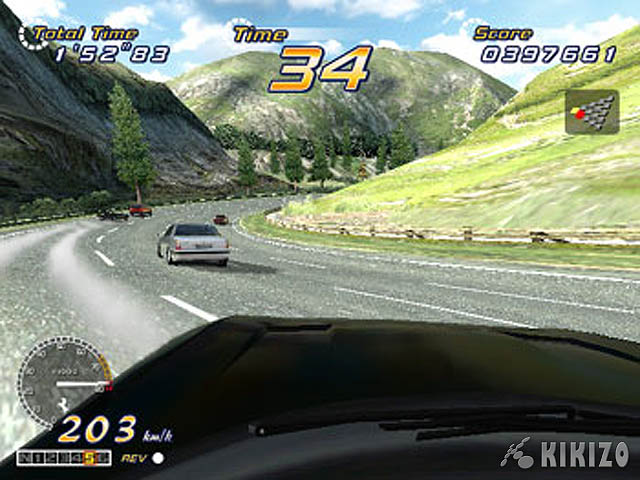
Drifting is the signature skill of OutRun 2. Sega AM2 built the Chihiro arcade game and Sumo Digital’s Xbox port around stylish slides that keep Ferraris pointed down branching coastal highways without murdering your timer. If you only grip through every corner, you will survive easy left forks and fail the harder right-side routes that lead toward the toughest Goals. This guide goes deeper than the one-paragraph overview in Getting Started: initiation, Automatic versus Manual, gear drifting, when not to hold a long drift, and how car classes change the feel of a slide.
Practice on a stage you already know. Time Attack and repeated Arcade restarts are better classrooms than a cold Goal E attempt. Pair this page with the Course Map so you know which corners deserve a big commitment, and with the Tier List when you start blaming the car instead of your timing.
The basic brake-and-gas drift
The universal initiation works on Automatic and Manual:
- Approach the corner with speed.
- Release the accelerator briefly.
- Tap the brake to unsettled the rear.
- Turn hard into the corner.
- Re-apply the gas to sustain the drift.
- Use small left-right corrections to manage angle until you can straighten and accelerate out.
Think of brake as the spark and throttle as the fuel. Too little brake and the car understeers wide. Too much brake and you scrub all speed before the slide even starts. The goal is a controlled yaw that lets you rotate early, take an inside line, and exit with the engine pulling again.
On gentle bends you may only need a feather of brake. On hairpins you need a clearer weight transfer. Watch the car’s rear: once it steps out, stop adding panic brake and start managing stick and throttle.
Automatic versus Manual
Automatic handles gear selection for you. It is ideal while you learn stage geometry and the basic drift cadence. You can still brake-and-gas drift everywhere. What you cannot do is the high-speed gear-shift initiation that advanced players rely on.
Manual adds shift-up and shift-down inputs. Beyond role-playing a gated Ferrari, Manual enables gear drifting: instead of lifting and braking, you quickly downshift then upshift (often described as a near-instant gear blip) while turning in. Done correctly, the car breaks traction with far less speed loss than a heavy brake tap. Community guides often note that gear drifts want you above a solid speed threshold; if you are too slow, the initiation fails and you understeer off. In that case drop two gears and climb one, or fall back to a normal brake drift.
Recommended path: learn brake drifts on Automatic, switch to Manual on the same course, then replace brake initiations with gear drifts corner by corner.
Gear drift details
A clean gear drift looks like this on a medium or high-speed corner:
- Stay on the throttle as you near turn-in.
- Flick down a gear and immediately back up.
- Turn in as the rear lightens.
- Modulate stick to hold angle without spinning.
- Exit by unwinding steering and driving out of the slide.
Because you barely touched the brake, your exit speed stays high. That matters on OutRun’s timer and on long chains of linked bends. Industrial Complex-style high-speed sections reward Manual hard; tight forest hairpins may still want a conventional brake drift or a hybrid.
Advanced players also talk about drift switching mid-corner: while sliding one way, release and steer opposite with throttle to swing the rear the other direction for an S-bend. Learn single-direction drifts first. Switching is a second-hour skill, not a first-corner trick.
When NOT to hold a long drift
This is the mistake that separates stylish demos from fast runs. A long, lazy drift looks cinematic and bleeds speed. OutRun 2 is not a score-attack game that pays you for smoke time in Arcade clear runs. Every extra degree of unnecessary angle is exit speed you will not get back on the next straight.
Hold a drift only as long as you need to:
- Rotate for the corner.
- Stay on the road.
- Set up the next direction change.
Then straighten and accelerate. If you catch yourself sliding the entire length of a sweeper when a shorter initiation would suffice, you are sightseeing. Heart Attack requests sometimes demand dramatic drifts inside a Start–End zone—that is a scoring exception, covered in Heart Attack Mode. Even there, oversliding after the request window closes still hurts your race pace toward the Goal.
Another anti-pattern: initiating so early that you crawl through the apex. Late, sharp initiations with strong exits beat early, slow arcs on most timer routes.
Car class and roster differences
Not every Ferrari slides the same. Broadly, players feel differences in how quickly the rear steps out, how much countersteer a slide needs, and how hard the car pulls on exit. Higher-powered or more aggressive cars can punish sloppy throttle in a drift; more forgiving cars let beginners hold a slide while they learn stick corrections.
Transmission gear counts also differ across the licensed roster (some cars use five speeds, others six). That changes the spacing of Manual gear-drift timing. When a gear drift “refuses” to start, check your speed and which gear you are blipping—not only your steering.
Use one car for a full practice session before hopping the garage. Compare impressions later on the Ferrari Roster and meta takes on the Tier List. Blaming handling while you still miss brake timing wastes both the car and the course.
Course-aware drifting
Easy left-fork stages forgive late corrections. Harder right-fork mountain, forest, and city stages chain corners so a slow exit on corner one makes corner two impossible. Before a serious Goal attempt, drive the route once with the sole goal of marking “brake drift,” “gear drift,” and “grip” corners. The Course Map helps you see how stages connect so you are not inventing a plan at eighty miles per hour.
Scenery hits and traffic kill drift setups. If you clip a barrier just before turn-in, your speed may fall below a reliable gear-drift window—switch to a brake drift instead of forcing the Manual blip.
Practice routine
- Pick one medium corner on an early stage.
- Do ten brake-and-gas initiations on Automatic.
- Switch to Manual; do ten gear drifts on the same corner.
- Do five runs where you deliberately exit early and compare timer or Time Attack results to five long-slide runs.
- Add an S-bend and practice one drift switch only after singles are clean.
- Take the same skills into a full Arcade route, then into Heart Attack drift requests.
Record or watch your line if you can. Most speed loss is visible as a car pointed too sideways for too long.
Linking skills to the rest of the wiki
Drift proficiency unlocks harder forks, cleaner Challenge mission cards, and higher Heart Attack grades. Return to Getting Started if controls or mode structure are still fuzzy. Use Heart Attack Mode when Clarissa demands drift stunts on command. Plan ambitious routes with the Course Map, and refine car choice via the Tier List.
Master the spark (brake or gear blip), feed the slide with throttle, and kill the slide the moment the corner is solved. That single habit will carry you from Palm Beach tourist to Goal hunter.
Frequently Asked Questions
Quick answers for OutRun 2 players.
How do you start a basic drift in OutRun 2?
Release the accelerator, tap brake, turn hard into the corner, then re-apply gas to hold the slide. Correct with small stick inputs until you can straighten and accelerate out.
What is a gear drift?
On Manual transmission, quickly downshift and upshift while turning in to break traction without a heavy brake tap. It preserves more speed than a standard brake drift when you are fast enough for it to register.
Why do long drifts feel slow?
Holding a wide slide for style scrubs exit speed. Drift only long enough to rotate and stay on road, then straighten. Arcade clears reward pace, not smoke time.
Should beginners start on Manual?
No. Learn brake-and-gas drifts on Automatic first. Move to Manual on familiar stages so gear-drift timing is the only new variable.
Do all Ferraris drift the same?
No. Step-out aggression, countersteer need, and gear spacing differ across the roster. Stick with one car per practice session, then compare options on the roster and tier list pages.